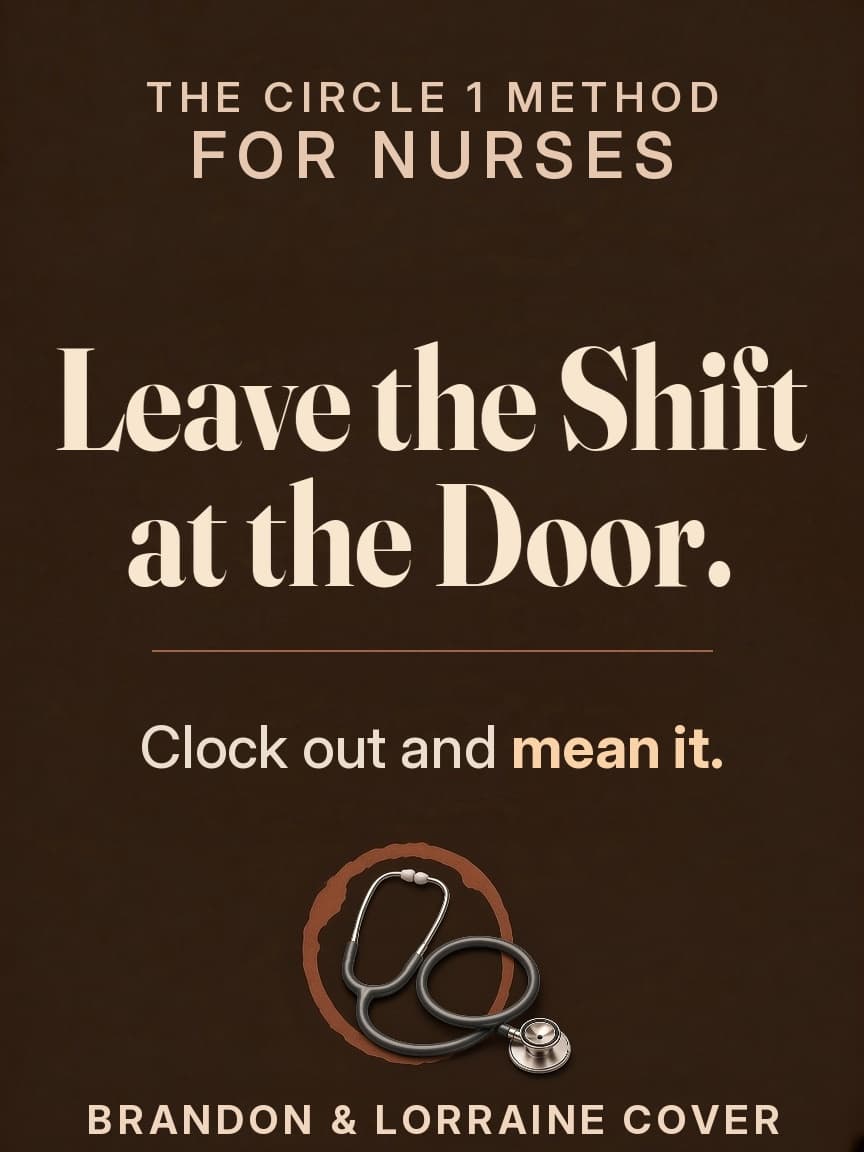
The short version Before the next staffing text comes, put this in your notes: 'Thank you for asking. Not this shift.'
If the text comes while you are still on the unit and already said 'maybe,' you can send the line an hour later. A late no is still a no.
The message comes at 4:02, or at 5:10, or while you are in the grocery store with a cart you have not finished. It does not say "optional." It says the floor is short, and it says your name, and your thumbs draft the yes before your back has voted.
You say yes on Monday for Tuesday, and Tuesday runs past the thing you had promised yourself, the class, the appointment, the night you were going to be home. You call that being a team player. Your day off becomes a rumor.
You say no once, and a coworker is cold to you for a week. The coldness works. The next text, you say yes faster, so the coldness does not come back.
You call out sick and spend the morning building a case, as if a fever required a closing argument. You apologize to people who were not harmed. You apologize to the group chat.
You pick up so the new nurse will not be alone, and you are right that she should not be alone, and you are also the third week in a row. The building has learned your number. Your number has learned to answer.
You tell your mother, or your partner, or your kid that you might have to go in. You say it lightly. They have heard the light voice before. They start adjusting the evening before you have sent the text.
It usually starts with a yes you sent before you had read the text, because the no felt like leaving someone in a room alone. The feeling is real. The conclusion is not. The short shift is the building's. The sentence you send is yours.
Why was Pam's chair empty?
Pam is 53, med-surg, 29 years, and a mother at home. The way of coping her old reflex reaches for is Provider: saying yes. The reflex keeps the peace by spending her. It does not feel like fear. It feels like being the one who does not let the floor drown.
On a Monday night she says yes to Tuesday's day shift. Tuesday runs past 7:00. Her chair at the library table is empty, because the workshop meets while she is still on the unit she already worked. Kathy, the night ED charge who does not soften a sentence to be liked, says they are not taking a break. The room talks about the short shift. They name it as something no one at the table controls. The staffing committee, the place a complaint can go and sometimes does, is something they can influence. Pam is not in the room to hear it. She is on the shift her yes built.
When she comes back, she tells the table about the Monday yes. The phone lights at 7:25 with the next week's text. She lets it sit. That is new. The sitting is the whole plot of the evening.
The sentence they practice until it sounds like her, and not like a script she is borrowing, is this:
Thank you for asking. Not this shift.
On Thursday the 4:02 text comes. She sends the sentence. She does not add a paragraph about how sorry she is, and she does not add a novel about her mother. The sentence is complete. A complete sentence is what the way she copes keeps trying to ruin, because a complete no feels like a slammed door, and that way of coping was raised to keep doors open with her own body.
Why does a no feel like abandonment?
The unit is short. That part is not a story you are telling yourself. Hallways fill. Call lights stack. A new nurse gets an assignment that should have been two people's. None of that is fixed by pretending your day off is a secret float pool.
What the old reflex adds, on top of the true shortage, is a verdict. If you do not go in, you are the reason. The shortage existed before your phone lit up. It will exist after you say no. The text is the building asking a person, one person, to absorb a math problem with her circadian rhythm. You can love the people on that floor and still refuse the math.
What a scheduled shift already requires is your unit's process, not this page's. The extra shift is the other thing. The ripple shows up the next week. A coworker is cold. That night Pam snaps at her mother. The old reflex, denied the yes, spends itself at home on the person who cannot write her up. The table catches it. "No to the text isn't no to the team." The cold coworker is outside Pam's control. She gets to be disappointed. Her disappointment is not a performance review you have to pass with your body. The snap at her mother is Circle 1, and it is the part Pam can repair without picking up the shift she already declined.
Later her daughter texts that she will sit with her grandmother on Tuesdays. The book does not treat that as a reward for the no. It treats it as what becomes possible when Pam is not the only person allowed to be useful. The fear in that way of coping is that if she stops, nobody else starts. Sometimes somebody else was waiting to be asked, and could not get a word in over Pam's yes.
Why do the polite scripts fail?
You can find a dozen ways to decline a shift that sound professional. Use clean words. The failure is not the wording. The failure is the apology you weld to the front, and the rescue you weld to the back.
I'm so sorry, I would if I could, next time I promise. The sorry hands the moral weight back to you. The promise hands them the next text for free. You have declined one shift and pre-accepted the one after it. The old reflex is satisfied, because the no was not a no. It was a delay.
Let me see if I can move something. You are now doing staffing's job in your car, in the parking lot of a grocery store. Moving something is how a day off becomes a puzzle you solve for free. If you need to check a real conflict, check it once. Do not open a negotiation with your own dinner.
The sentence in the book works because it thanks the ask, names the answer, and stops. Thank you for asking. Not this shift. You can be warm and finished in the same breath. Warm and unfinished is how that way of coping lives.
What does the board's rule protect?
In the chapter called You Clock Out, the room gets a grid. Impact against effort, with one rule written where nobody can miss it: You clock out.
Required care is never in the corner you drop. The patients you already have, the meds, the turns, the handoff: that work is the floor. It does not go in the pile of things you are allowed to shrug off because you are tired of being a person. The extra shift, the one that is not your assignment, is not required care. It is the building's shortage looking for a volunteer. The grid is how you stop calling every ask by the same name.
Stephanie learns the same floor from the other side: a clean clock-out does not cancel a callback she promised. A no to extra work is not permission to drop the work that was already yours.
If your no is clean and your yeses inside the shift get sloppy, you have overcorrected. The table in the book exists to catch that. You can catch it yourself with one question at the door: did I hand off the patients I had, or did I only escape? Escape is not the practice. Clocking out is.
Worth lives in Circle 1. Nowhere else.
Where does one staffing text sit in the three circles?
Circle 3 is what you cannot control: the shortage, the census, the coworker who goes cold, the manager who sighs. You did not create the grid they are trying to fill. You cannot fill it by becoming a second FTE in your off hours. Say that plainly so the guilt has to argue with a fact.
Circle 2 is the staffing committee, the charge nurse who can move an assignment, the coworker you can tell the truth to without a speech. Influence. You may ask. You may not get it. A no does not require you to solve the board first.
Circle 1 is the sentence, the thumb that waits, and the way you speak to your mother after. That is the worth. Not in being the nurse who never declines. In being the nurse who can decline and still be safe for the patients she already has, and still be someone her family recognizes.
Why does a real lunch belong with the no?
Pam's finish in the book is not only the text. It is one whole shift with a real lunch, and the no. The two belong together, and it is easy to miss why.
A nurse who never declines and never eats is running one pattern with two ways of coping. The skipped meal is the shift eating her from the inside. The extra shift is the building eating the day that was supposed to be hers. The way she copes experiences both as love. The body experiences both as a debt. If you only practice the no, and you still work your own shifts without sitting down, you have moved the abandonment onto yourself and called it discipline. The book does not call that a finish. The finish is the lunch and the sentence.
There is a practical order. On the shift you already have, you eat. That is not a lifestyle. It is the floor, the same way the handoff is the floor. On the shift that is not yours, you use the sentence. If you cannot do both in the same week, do the lunch first. A no sent by someone who has not eaten since dawn comes out either savage or soggy. Pam's first real lunch in a long time happens in the room of the practice, not as a prize at the end. The table can see it. Your kitchen can see it too, if you let the bowl reach a table.
What do you do with the next text?
- Write the sentence before the text comes. Put it in your notes. Thank you for asking. Not this shift. Read it out loud once, in your kitchen, so your mouth knows it. The way you cope will try to improvise a softer version under pressure. The softer version is the yes in a cardigan. Use the sentence you practiced, the way Pam does, until it sounds like you.
- Let it sit through one small thing. The length of a glass of water. The walk to the car. Not three days of haunting the group chat. Long enough that the thumbs are not the old reflex's. If the shift is one you already owe, because of a schedule you agreed to, this pause is not a trick for getting out of the job. It is a pause so you know which kind of text you are holding.
- After you send it, do not manage their weather. Do not follow up with a sorry. Do not offer a different shift to purchase the peace. If you snap at home, that snap is information. You declined the unit and billed your kitchen. Name it, apologize for the snap, and do not "fix" it by picking up Friday. The repair is the sentence at home, not a second yes.
The neighbor to this page, if the no is stuck because you are afraid of being the nurse who fails people, is Made a mistake at work. Different reflex, same talent for keeping a file open. If the dread is the night before the shift you already have, that is Dreading your next shift.
The opening is on the nurses page. The book is where Pam sends the sentence, and where the table is still there the week the coworker goes cold.
Find your pattern · free 3-minute quiz →
Download this guide (PDF)